
North Carolina CEAL Teams Collaborate with Community Partners to Improve Health Outcomes
Across North Carolina, leaders in community-engaged research are advancing innovative approaches to improve health outcomes by centering community voices and using promising practices. Al Richmond, M.S.W., principal investigator of the North Carolina CEAL Regional Team (NC CEAL) and executive director of Community-Campus Partnerships for Health (CCPH), and M. Kathryn Menard, M.D., M.P.H., principal investigator of the AC3HIEVE study within the Maternal Health Community Implementation Program (MH‑CIP) and distinguished professor of Obstetrics and Gynecology at the UNC School of Medicine, bring complementary perspectives to this work. Together, they demonstrate how community-guided priorities, strong partnerships, and rigorous yet practical research design can drive meaningful change, from addressing chronic disease concerns to improving maternal health and hypertension-related outcomes before, during, and after pregnancy. As CEAL programs prepare to gather in Charlotte, North Carolina, for the CEAL Annual Meeting in March, we interviewed Mr. Richmond and Dr. Menard about the work of NC CEAL research teams that continue to shape community-engaged research across the state.
How do you address local disease priorities and concerns?
Richmond: We support community leaders and organizations in creating local health programs based on what the community says it needs. We share information about funding, training, and networking. We also help communities learn from each other by sharing best practices across the NC CEAL network.
Menard: Our AC3HIEVE study helps health care providers and patients recognize and treat severe high blood pressure during pregnancy and postpartum. This condition is one of the leading causes of maternal morbidity and mortality. Local providers told us that they need better ways to spot and respond to high blood pressure. We are engaging community providers and their patients in developing feasible and acceptable improvement strategies. Early recognition and timely treatment will result in better health outcomes for both the mother and her newborn.
What role does CCPH play in strengthening partnerships and accelerating progress?
Richmond: We connect communities with academic and local organizations. Strong partnerships happen when everyone shares their strengths and learns from each other. We use CCPH’s Principles of Partnership to guide and sustain these relationships.
How do you create a well-structured study design that is also responsive to local needs?
Menard: Our community partners wanted an outpatient safety plan for severe high blood pressure. We didn’t want to leave some clinics out, so we chose a study design that lets us test the plan while including everyone. All clinics started with usual care — best-practice materials and instructions. Then, in three groups, clinics added coaching, training, and simulations over time. This approach allowed us to compare results and meet local needs.
What is an example from your program of community-informed research design?
Richmond: Our NC CEAL Coalition makes community-led research possible. For example, our Research Leadership Academy created a six-month program to help community leaders design and lead health research.
Menard: Respectful care is part of our safety plan. We train providers using simulated events and measure respectful care with a tool created by women who had pregnancy complications. They helped define what respectful care looks like — clear communication, informed choices, and education that fits their needs. They also help to score training videos using this tool.
What lessons from your work could inform others?
Richmond: NC CEAL relies on a reciprocal relationship with coalition members in which our projects thrive due to coalition expertise and the interconnectedness of community relationships, and we provide ample opportunities for coalition members to secure funding, expand their skills, and network with other community leaders.
Menard: To make a project successful, start by finding community leaders and liaisons early so they can help guide and build trust. Keep the work realistic by balancing enthusiasm with what is possible, and avoid taking on too much. Work with health systems and prenatal care practices at the same time to speed up the process. Finally, respect participants’ time and keep them engaged by showing the value of the project to clinics, providers, staff, and patients.
Looking ahead: What’s next for your work?
Richmond: We hope our Research Leadership Academy will help community leaders play a bigger role in research — not just as participants, but also as partners in solving local health problems.
Menard: We plan to share our safety plan widely with state and national groups. We’re creating a toolkit to help others implement the plan. We’re also exploring new ideas, like adding care steps to electronic health records and using AI to improve training simulations.
Richmond and Menard show how community engagement can be woven into every stage of research by combining community partnerships, shared decision-making, and flexible implementation methods adaptable to local needs. Their efforts demonstrate how this model can be replicated across community-engaged research programs that aim to strengthen trust, improve health outcomes, and build sustainable collaborations. The structures they rely on, including NC CEAL’s coalition-led leadership, community-informed evaluation tools, and adaptable implementation strategies, offer a practical blueprint for other teams that want to scale similar approaches. As NC CEAL expands opportunities for community members to take on leadership roles throughout the research process, and MH-CIP prepares tools and strategies to support the wider adoption of maternal health interventions, their work highlights how the CEAL model can help communities and researchers collaborate effectively and create lasting, community-driven solutions.
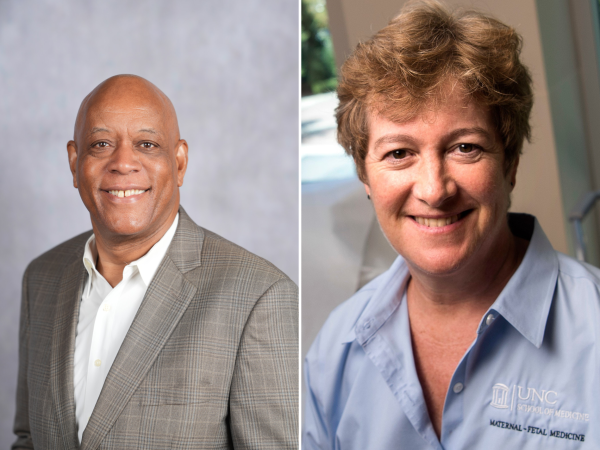
Al Richmond, M.S.W., and M. Kathryn Menard, M.D., M.P.H.