
How Does Caring for Others Affect Community Health Workers (CHWs)? The Impact of Being a CHW
CHWs: Our Work + Our Health, a project of the Illinois CEAL Regional Team (IL CEAL), is working to answer the question: how does the work community health workers (CHWs) do impact their health and well-being? Understanding these effects can inform recommendations for organizations that employ CHWs, helping them to provide appropriate workplace support, prevent burnout, improve retention, and maximize CHWs’ effectiveness and impact.
Study findings will be discussed at the upcoming APHA conference. In this interview, study authors and IL CEAL researchers Patricia Labellarte, M.P.H., and Adlaide Holloway, B.S., will explore the link between CHW well-being and health, the ongoing challenges CHWs face in their work, and strategies to better support their well-being for long-term success.
Community health workers are known for improving health outcomes in the communities they serve. Why is it important to better understand the impact of this work on CHWs’ own health and well-being?
Adlaide: Although CHWs’ effectiveness in addressing health gaps is well-documented, CHWs’ own health needs remain largely unexplored, despite many facing the same challenges as their clients — including low economic-social status, chronic illness, and an unnerving amount of exposure to trauma. Furthermore, CHWs typically receive inadequate compensation for their demanding work. Currently, it is unclear whether the intrinsic rewards and employment stability of CHW positions enhance well-being or if these benefits are overshadowed by occupational stressors, and we hope that this research will help to figure that out.
Patricia: It’s important to better understand this so that employers can properly support CHWs, not only to maintain or improve the well-being of their employees, but also to maximize retention and the impact of CHWs’ work.
This study was designed in partnership with CHWs, including an advisory council of CHWs. How did their involvement help shape the research and ensure the study reflected real-world experiences?
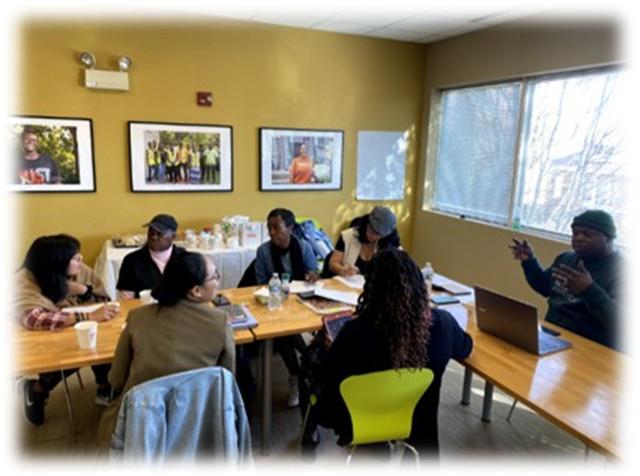
Adlaide: Having CHWs as a part of the design, development, and dissemination of this study helped to ensure that the CHW was authentically being explored without bias and with as much consideration of harm avoidance. The CHW advisory council that we assembled shared their firsthand knowledge of the community’s needs, challenges, and realities of the CHW experience. The CHW advisors helped us determine the relevant questions to include, refine and update language that was invalidating or confusing, and identify areas where we needed to take additional care in our approach. Overall, the CHWs who contributed to this study, both the advisors and respondents, helped to ground this work to be meaningful and clarify what it takes to support and advance the life-changing work CHWs do.
More than three-quarters of survey respondents reported living with a chronic health condition. What does this finding reveal about the realities of the CHW workforce and the challenges they may face while supporting others?
Patricia: This finding reveals that although CHWs provide tremendous support to their clients, many of whom live with chronic health conditions, it is important for CHW employers to recognize that their own employees often need support themselves to improve or maintain their well-being.
Adlaide: I hope that it encourages employers to support CHWs with practical accommodations and patient-performance expectations for CHWs to improve and manage these conditions.
What factors were associated with differences in CHWs’ health outcomes and experiences or stress or burnout, and what challenges could employers implement to better support CHWs’ health and well-being?
Patricia: Presence of depression or anxiety symptoms was associated with lower perceptions of supportive work culture, work/schedule flexibility, and health culture at work at the time of survey completion. Additionally, presence of anxiety symptoms was associated with lower perceptions of meaningful work. CHW employers should invest time and resources into creating and maintaining a supportive work culture by providing schedule flexibility, paid time off, reasonable caseloads and expectations, CHW-specific mental health support, and sufficient compensation and benefits.
Given the value and unique role CHWs bring to communities, what is one key thing employers should keep in mind when supporting and working with the CHW workforce?
Patricia: CHW employers should invest in creating and maintaining a supportive work culture to improve the well-being of CHWs working at their organizations, which should lead to a healthier, more sustainable CHW workforce that continues to deliver services and interventions that create stronger, healthier communities.
If there is anything else you’d like to add that hasn’t been covered, please feel free to share!
Adlaide: I am thankful to be a part of research that is directly connected to and created with the people and communities that will be impacted by the efforts and outcomes of this study.
Attend the IL CEAL presentation, Does being a community health worker (CHW) impact my health? A mixed-method study of CHW health,* on Monday, November 2, from 9:15 to 9:30 a.m. at APHA.

Adlaide Holloway, B.S., and Patricia Labellarte, M.P.H. CHW Group Photo Caption: CHW Advisory Council
Last updated: October 29, 2026