
Strengthening Community Health Through Braided Collaboration
Roger Clark, vice president of S.O.N.S. of Phoenix and a multiple principal investigator with the DMV CEAL Regional Team (CEAL DMV), has long worked at the intersection of community health, research partnership, and grassroots leadership in Baltimore. Through his involvement with CEAL DMV and deep ties to local research institutions and community organizations, Roger has helped strengthen community-engaged approaches that center collaboration and sustainability. In this interview, Roger discusses how these partnerships helped lay the groundwork for S.O.N.S. of Phoenix’s CareFirst-funded project, “Eat Better! Exercise More! Text Me in the Morning,” which he presented to the CEAL Community-Based Organization Community of Practice.
Tell us about the “Eat Better! Exercise More! Text Me in the Morning” project.
“Eat Better! Exercise More! Text Me in the Morning” is a community-based health project that uses text messaging and community health worker (CHW) engagement to support healthier eating and physical activity. The project also connects participants to resources that address social determinants of health and incorporates structured data collection to evaluate outcomes. The goal is to improve individual health while generating data that can support research, advocacy, and future replication.
CEAL didn’t fund this project, but how did CEAL lay the groundwork?
When you have had the opportunity to sit in rooms with researchers [through CEAL DMV] and hear how they develop research projects, the language being used, how they describe their work, and how they plan to execute the study, you can’t help but believe you can do the same. S.O.N.S. of Phoenix is fortunate to be close to major research institutions, where we have access to researchers and staff who can provide guidance. Since SOP has been involved in previous CEAL-funded work, we have gained insights and developed relationships that help us carry out our work.
Can you describe what “braided collaboration” means to you and how it has shaped the CareFirst project?
Through braided collaboration, we are weaving together multiple funding streams or partnerships to support a common goal. When the S.O.N.S. of Phoenix looked at the CareFirst grant, we knew we were interested in pursuing it, had a project that would benefit participants, and understood the organizational gaps we needed to fill.
To bring rigor to the project, we worked with Dr. Joy Nanda, with the Maryland Department of Health, who helped sharpen our aims, methods, and trial design. We partnered with a data company, Genarius, which helped develop survey questions and provided a data capture platform for our CHWs. The Medi, a nonprofit tool, supports our CHWs in providing resources related to social determinants of health. We also tapped into guidance from Johns Hopkins, University of Maryland, Morgan State University, Howard University, University of Washington, and The George Washington University, along with volunteers and local CBOs [community-based organizations] we work with daily. Each partner contributed something essential to the study’s rigor and feasibility.
What does braided collaboration make possible that traditional single-source models don’t?
Direct funding doesn’t always come through collaborative partners, but when you have the right partners at the table and are aligned, it helps you advance your work further than constantly bootstrapping. The academic institutions in our area support us with human capital. Small, upstart CBOs are at a disadvantage when seeking funding due to capacity gaps and their inability to provide the necessary metrics. A braided collaborative approach enables organizations like the S.O.N.S. of Phoenix to grow and continue doing important work.
Why was it important for S.O.N.S. of Phoenix to use a national data set and data-driven methods in this project?
We are planning to submit our findings for publication and want our information to support advocacy efforts at the city and state levels. National datasets are designed to represent large populations through careful sampling, so our findings can be generalized beyond the small sample. Using data-driven methods allows the data to speak for itself. We should be able to spot trends and relationships directly from the data.
Will other ZIP codes or CBOs be able to use this model?
This model is replicable in other Baltimore ZIP codes because we have relationships on the ground and a support ecosystem to assist us. We can engage other CBOs in the city to replicate this model. Outside our community, working with local partners who have strong partnerships in the community and academia, we could support an effort. We are proud to lay the groundwork for others wanting to make positive change in their communities.
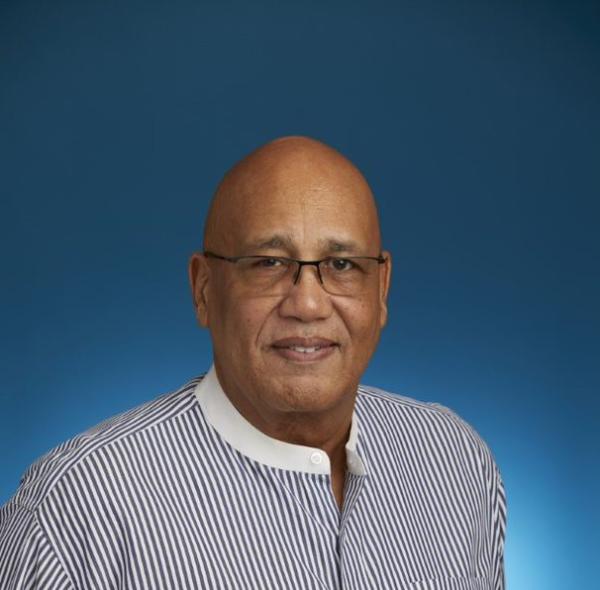
Roger Clark, vice president, S.O.N.S. of Phoenix, CEAL DMV M.P.I.
Last updated: June 3, 2026