
Addressing Barriers to Breast Cancer Screening in Puerto Rico
Monitoreo Activo de Mamografía y Orientación (MAMO), a project of the Puerto Rico CEAL Regional Team (PR CEAL), is examining why annual breast cancer screening rates have declined among Puerto Rican women. At the upcoming American Public Health Association (APHA) conference, the PR CEAL team will present how the study links barriers such as transportation access and culturally relevant educational information to delays in seeking medical care. In this interview, PR CEAL researchers Nashaly M. Saldaña Santiago, M.P.H., CHES, Diana T. Medina-Laabes, M.S., Karelys I. Canales Birriel, Ph.D. (c), M.P.H.E., and Alondra K. Mercado Andino, M.P.H., offer evidence-based solutions, encourage continued involvement of community health workers, and consider additional barriers that can affect Puerto Rican women attending their annual mammography screening.
Beyond increasing the number of women who complete their yearly mammography exam, what do you hope the MAMO study will achieve?
Beyond increasing annual mammography screening rates, we hope the MAMO study will create a sustainable model that continues to benefit our participants long after the study ends. In Puerto Rico, around 20% of women are nonadherent to breast cancer screenings. Moreover, breast cancer represents 31% of overall cancer diagnoses in females on the island. By working closely with Federally Qualified Health Centers (FQHCs) and our community partners, we aim to establish processes that help women in these communities receive the care needed to stay up to date with recommended breast cancer screenings.
What was your approach to ensuring cultural competency and health literacy were integrated successfully into the study?
In 2023, through a pilot study, we identified a wide range of personal, social, and systemic barriers, which allowed us to design strategies and resources that address participants’ needs and challenges. Key informant interviews with providers helped us understand how health care systems operate and tailor our intervention to effectively support Puerto Rican women. As the intervention design progressed, members of the Community Scientist Program reviewed MAMO protocol and materials and provided feedback to ensure the content was culturally appropriate, easy to understand, and relevant to our communities. These collaborative efforts helped create an intervention that is culturally responsive and addresses health-literacy gaps in our communities.
What was the biggest challenge with developing educational components? How were community health workers (CHWs) involved in the process?
One of the main challenges in developing the educational component was translating evidence-based breast cancer screening information into culturally relevant, easy-to-understand content that addressed the specific needs and barriers women in Puerto Rico face; this process took about six months. CHWs were actively involved in development and currently deliver the educational components to participants. Their experience working directly with community members and in our pilot study helped the research team identify common barriers, questions, and misconceptions related to breast cancer screening.
How were community members and/or leaders involved in data collection and strategic planning?
Community members and leaders played an important role in both data collection and strategic planning throughout the MAMO study. We worked with 15 FQHCs that help facilitate access to mammography services, provide space for participant recruitment activities, and refer women who may be eligible for our study. Their involvement has been essential to reach our target population. In addition, our community partners contributed valuable insights during our planning and development stages. Their community experience helped us design a more robust, culturally appropriate intervention that addresses real-world needs.
If the study were to have subsequent phases, what other barriers would PR CEAL focus on?
If our study continued into subsequent phases, we would focus on barriers faced by women living in rural communities across Puerto Rico. These communities face poverty rates of 40-60%, limited access to health care services, and inadequate infrastructure. This results in fewer hospitals, primary care centers, and facilities that offer mammography screening. As a result, these women need to travel long distances to receive preventive care, creating additional challenges. By developing innovative strategies, future efforts could focus on identifying and addressing these geographic and structural barriers.
Attend the PR CEAL presentation, Monitoreo Activo de Mamografía y Orientación (MAMO): An islandwide intervention to increase mammography screening in Puerto Rico,* on Monday, November 2, from 12:30-1:20 p.m. at APHA.
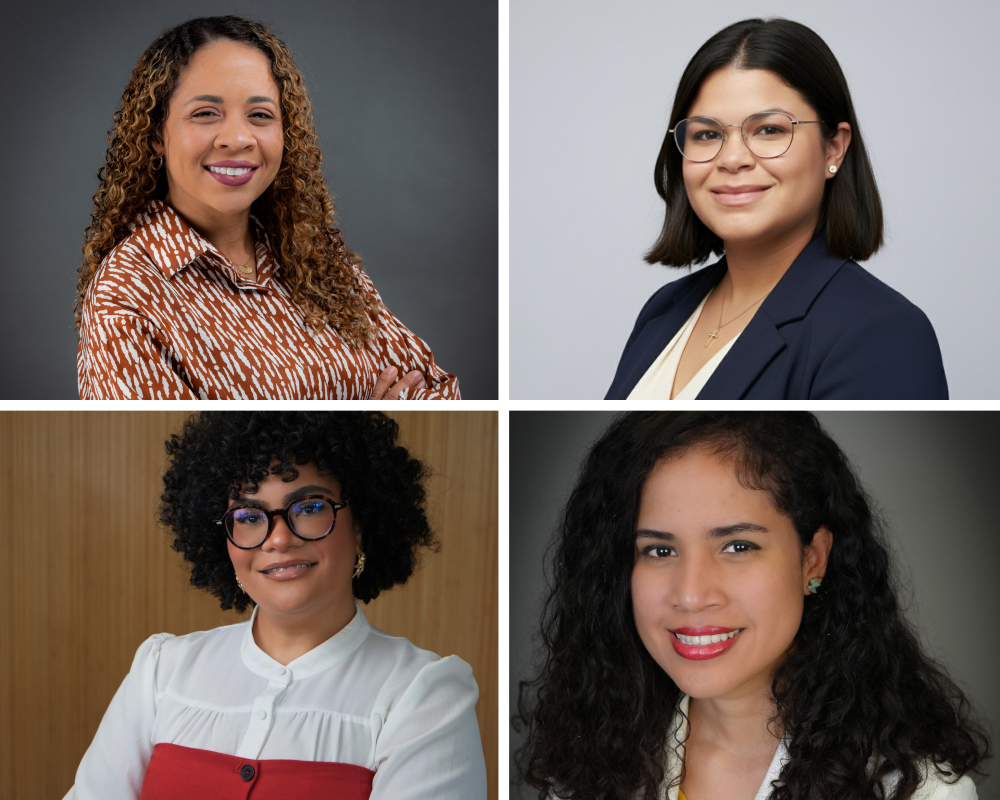
Top row (left to right): Karelys I. Canales Birriel, Ph.D. (c), Nashaly M. Saldaña Santiago, M.P.H., CHES
Bottom row (left to right): Alondra K. Mercado Andino, M.P.H., Diana T. Medina-Laabes, M.S., M.P.H.E.
Last updated: October 20, 2026