
Wise Practices for Outreach, Messaging, and Engagement With American Indian/Alaska Native (AI/AN) Communities
This resource provides guidance for researchers who are interested in engaging with American Indian/Alaska Native (AI/AN) communities and includes recommendations for:
- Working with Tribal leadership structures and community partners
- Using terms, language, and imagery that are respectful and effective
Although the recommendations below are not representative of the entire AI/AN community, they are intended as a mindful starting point, providing general guidance for creating respectful collaboration and recruitment materials, as well as cultivating intentional partnerships.
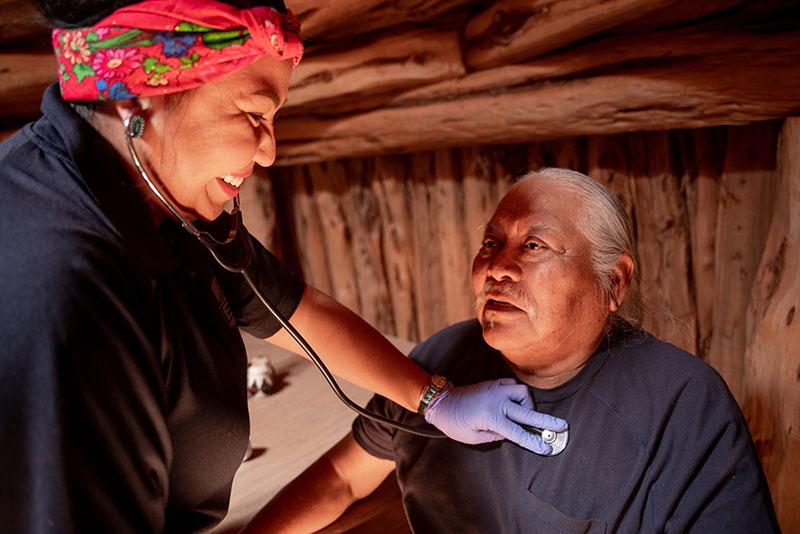
Community Engagement
Community engagement is not a one-size-fits-all approach. Researchers must understand and respect different communities, including how they prefer to be involved in research and the most effective ways to earn their trust and build strong, reciprocal partnerships.
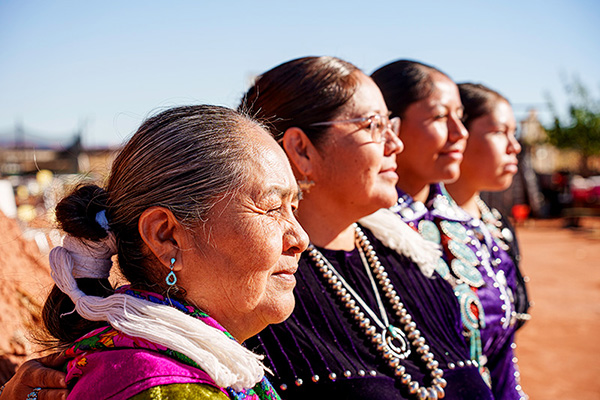
Partnering With Tribal Leadership Structures
- Tribal communities experience various levels of sovereignty and legal recognition: federal recognition only, state recognition only, both, or neither. This can affect the formality of structures, processes, and resources in place for partnership outreach and research proposal review.
- Ensure your research is acceptable to the community by partnering with a Tribal Council or other community leadership entity (e.g., advisory board, urban Native-serving organization).
- Take time to understand the community’s specific Tribal infrastructure and communication channels, as approaches may vary depending on the community and their existing pathways for research approval.
- In communities with formal processes, follow set procedures, which may include submitting materials through a review portal and attending meetings to answer questions. Consider attending a Tribal Council meeting to present and discuss your project.
- In communities without formal processes, identify a community champion who supports your research topic and can guide you on whom to approach for approval and feedback.
- Be receptive to feedback to ensure the project is well-received and aligned with community values.
- Be open, transparent, and honest in your interactions with the Tribal Council or leadership, and be prepared to answer any questions.
Incorporating Community Into the Research Team
- Partner with trusted messengers or community champions and groups who represent the community.
- Work with content developers, reviewers, and editors who have demonstrated history and cultivated trust with the community.
- Consider forming a Community Advisory Board or creating roles for community partners on your research team to offer their lived and learned experiences.
Understanding Community Priorities and Expectations Together
- Ensure that expectations match capacity. Community partners are in a difficult position as bridges between their community and the study team. Be mindful not to jeopardize the champion’s relationships with the community, and manage the research team’s expectations.
- Acknowledge the potential challenge of time constraints and the multiple responsibilities of community partners, noting the need for thoughtful compensation and consideration of the time and energy these partners devote to research activities.
- Community priorities are not always the same as researcher priorities. They have their own timing, and they are the experts on their needs.
Supporting Responsive Communication and Engagement Practices
- Be consistent and responsive in your engagement before, during, and after the project. Frequency is important to show commitment to the community and the relationship.
- Ask your community partner how to best stay connected, and follow through (for example, e-mail updates, phone calls, or monthly check-ins).
- Host a meal for the community, attend a general Tribal meeting, and facilitate opportunities to speak with the community.
- Be transparent, available, and proactive in engagement with Tribal leadership and the broader community.
Terms and Language
Language should be developed collaboratively with community partners to ensure relevance and cultural appropriateness. Labels, terms, and substitutions should be used in a community-appropriate context. Respecting community-specific terminology fosters trust and positive relationships in research and community partnerships.
Using American Indian/Alaska Native Labels
- Use the label American Indian/Alaska Native, a widespread and appropriate label that aligns with the terms used by the federal government(NIH Resource).
- Avoid only using the “AI/AN” acronym, especially in headings and titles. Write out the full words to prevent confusion.
- Use both “American Indian” and “Alaska Native,” unless the imagery and language are specifically focused on Alaska Natives.
- Do not repeatedly say the name of the community or population in focused engagement materials. It is not necessary.
Ensuring Appropriate Labels and Language
- Capitalize words like “Tribal,” “Indigenous Peoples,” and community-specific names.
- Consider differences like Canadians often using “First Nations,” whereas Mexicans and others often use “Indigenous.” Verify which names the community prefers.
- The term “Indigenous” is broader and can be more open to all Indigenous Peoples, including those outside of North America.
- “Native American” is a legal term that includes American Indian, Alaska Native, Native Hawaiian, and people from the U.S. Territories (e.g., Guam, Puerto Rico, American Samoa). (U.S. Code Title 25).
Speaking in the Right Tone
- Speak directly to the audience and not about the audience by using “you” instead of “they” or “your community/communities” instead of “the community.”
- In urban Native communities, use terms like “our relatives,” as these can be used to create a sense of shared belonging and unity (for example, “serving our relatives” in places like Seattle or Denver).
Highlighting Connectedness and Hope
- Connectedness is a foundational concept in Indigenous cultures. Describe the value of the research project for their family and loved ones.
- Use language that promotes hope for the future, highlighting the role of research in improving community health.
Using Clear and Effective Language
- Avoid using too many technical terms, and use plain language whenever possible.
- Prioritize clarity and explain research value and tangible outcomes for participants and their families.
- Clearly explain the study, trial, or research organization. The name, scope, and purpose of the research or institution should be clear and easy to find.
- Explain the difference between “confidential” and “anonymous,” highlighting in detail how these terms may come up in the context of study activities and data management.
Including a Clear Call to Action
- Use statements like “Join_____to help those in your community!” instead of questions like “Why join?”
- Invite people to be a voice and not the voice. One person cannot speak for an entire community and should not be expected to.
Imagery
Respectful and meaningful imagery is important in connecting with AI/AN communities. Outreach materials should use appropriate visuals that accurately represent the community in real environments.
Ensuring Appropriate Use of Symbols and Motifs
- Avoid using Tribal symbols unless the exact meaning or purpose is known. These symbols have a deep cultural and often personal meaning. Instead, focus on images of landscapes or people.
- Use images from various geographic areas if the outreach is national. AI/AN populations are widespread and not specific to one region. Determine landscapes or nature imagery that will be the most meaningful to the community of interest.
Using Photos and Images
- Be aware of the overuse of stock photos. Images of underrepresented groups are used frequently for many purposes and are often overused in marketing materials. Ensure ethically sourced (i.e., fair compensation) material and permission with images used for the project.
- Try finding AI/AN modeling agencies or models, or make connections with Native individuals to pose for photos, to make your photos more unique and original to your materials. Additionally, these models are often a part of the community and are aware of its needs.
Showing Connectiveness and Representation With Strength-Based Imagery
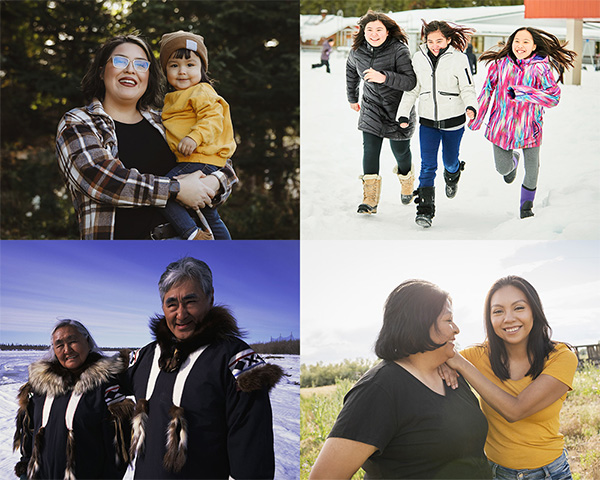
- Use images of people interacting with each other to show connectedness and counter feelings of isolation, providing an authentic and emotion-based look and giving more life to the material, making it seem less clinical.
- Use images of people of various ages that represent multigenerational households, which are highly valued in Native culture. Showing families in images can make the material more interesting.
- Include images of Elders, who represent a wealth of culture and knowledge.
- Use strength-based imagery that highlights the positive attributes of the communities you are engaging with.
- Include a mix of community members in relevant modern or contemporary settings (at school, at work, or using transportation), not just in traditional settings wearing traditional dress (e.g., wearing regalia at a powwow).
CEACR Resources
CEACR resources were developed using expert insights and direct community feedback. CEACR requests that users provide feedback on this resource to inform future product development. Please complete the CEACR Resource Feedback Form*, managed by University of Pittsburgh Clinical and Translational Science Institute (CTSI), to provide your feedback.
CEACR supports the CEAL mission by serving as a conduit for promising community-engaged practices. CEACR supports NIH-funded research teams seeking to apply principles of community engagement to encourage research participation.
Acknowledgments
This resource was developed by a CEACR expert panel session focused on engagement materials created by a research team and intended to recruit individuals from American Indian/Alaska Native (AI/AN) communities. The resource was refined through an iterative dialogue process with the AI/AN CEAL Collaborative, which includes representation across the CEAL Initiative and conducts community-centered research driven by and designed for AI/AN communities.
Contributors highlighted the following sources as informative to this resource:
- Elements of Indigenous Style: A Guide for Writing By and About Indigenous Peoples — Gregory Younging
- Indigenous Recommendations: Indigenous Cultural Identity of Research Authors Standard (ICIRAS)
- Center for Indigenous Health at Johns Hopkins Bloomberg School of Public Health Knowledge Center